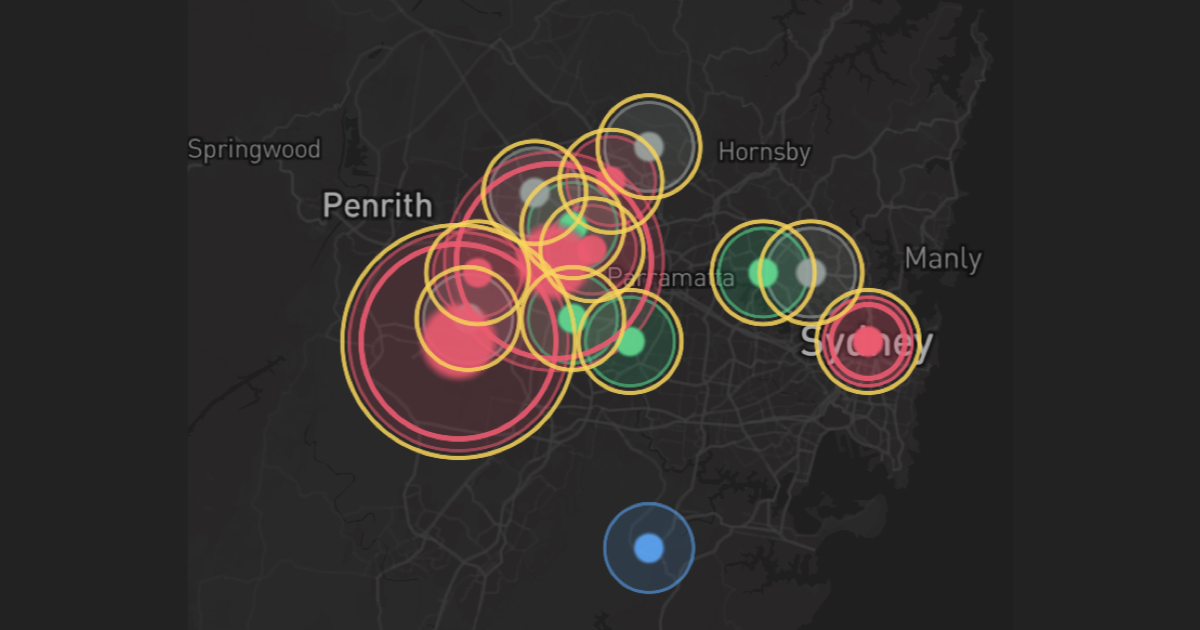
The build out of data centres across Australia is now facing community backlash, at a time when AI enablement is being mandated across many government agencies.
The rift reflects distinctive and increasingly contested territories of sovereignty-claims shaping the terrain.
This is a living atlas being mapped by an agentic-civic practice, one that is actively and recursively listening to the different narratives competing for territory.
Each one claims a right to fundamental decisions about what kind of infrastructure should be prioritised in communities, when compute infrastructure becomes demanding.
Civic interplay was meant to be a quiet set of reflections on what it means to become-citizen in an era of planetary-scale AI systems.
Except the question of whose sovereignty citizens are signing up to keeps going unresolved. Situations on the ground are becoming increasingly strained.
So it’s time to put this agentic workforce to use.
A living atlas of contested AI sovereignties
What the map does
This live infrastructure tracker maps the fast-tracking of data centre approvals across Australian states and territories. The tracking is informed by the idea that data centres are expressions of AI Sovereignty, an agenda led by hyperscaling AI companies to claim territorial control in the name of compute capacity.
AI Sovereignty is not a neutral term, and indeed many of us citizens may in fact agree with the need for AI Sovereignty, in the form of reliable access to localised AI capabilities spanning AI compute infrastructure, local AI capabilities, and AI models.
The point here is therefore not to oppose the AI Sovereignty agenda, but instead to understand that how it lands matters. It is not a ‘one size fits all’ and it does not have to be the version mandated by hyperscalers. There are curatorial decisions to be made, about the relative weighting of investments in compute, chips, capabilities and civic-intelligence associated with agentic-workflows.
Land, resources, models, data and capability are all part of an AI Sovereignty stack that can be shaped differently, depending on the governance priorities in place.
The map here demonstrates that Australia is opting for an approach that replicates the same poor fiscal management of the mining boom, allowing the extraction of critical minerals and resources without attendant investment in localised AI innovation hubs or models. While some nascent investment is underway in these fields, the scale is heavily weighted towards the resource extraction approach.
The map aims to make this situation visible. It tracks data centres, mines, refineries, and links these to localised environmental conditions. It also tracks ownership and approval structures, and the associated public debate forming around each site.

Open the live map, or read over at Notion how the project works.
The question is not whether to use AI systems - they’re embedded in all our digital workflows now, no? - but what kinds of digital sovereignties, and by implication, what kinds of digital citizenship, are being fostered through infrastructure roll-out and the mandate to grow AI capabilities using hyperscaler models. Through a comparative agenda it will, in turn, be possible to see that there are many potential versions of AI sovereignty coalescing as new alliances foster distinct models and capabilities.
Further reading: Urban AI, from RMIT’s Centre for Urban Research Thought Leadership Series.
Please note: This work is in the emergent-state. Do get in touch if you would like to collaborate; it’s an open field.
How it’s built
This is built through a relational agentic-civics that uses the tools of co-intelligence to enquire and expand upon the question of sovereignty and belonging in an era of planetary AI.
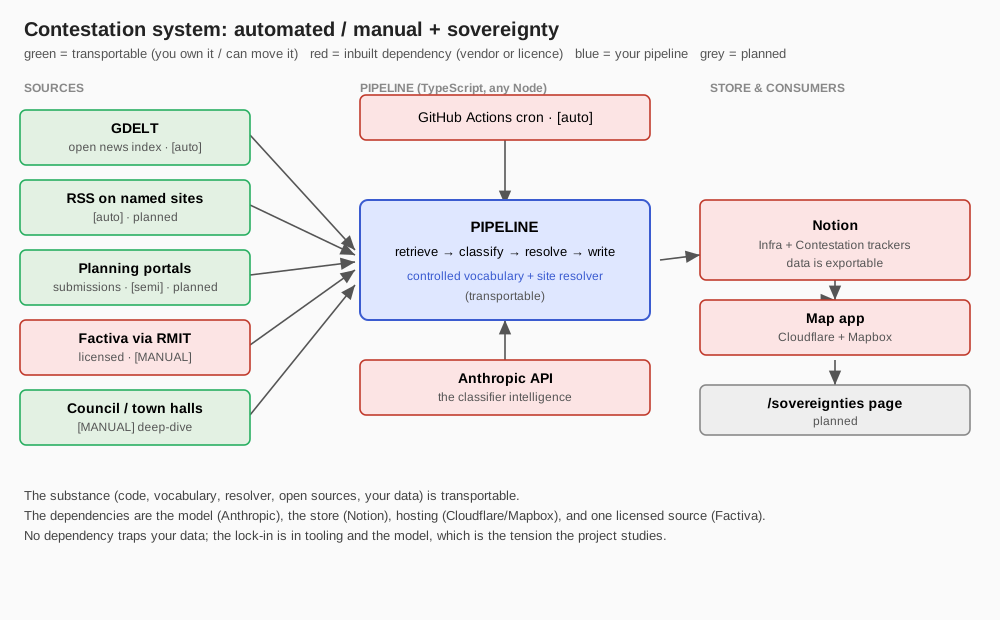
The architecture of the first release is below. The architecture should be more open source than it is, granted.
Contributions welcome
If there are errors or blind spots please let me know. You can use this form to fill in gaps or send an idea.
The interpretive lens
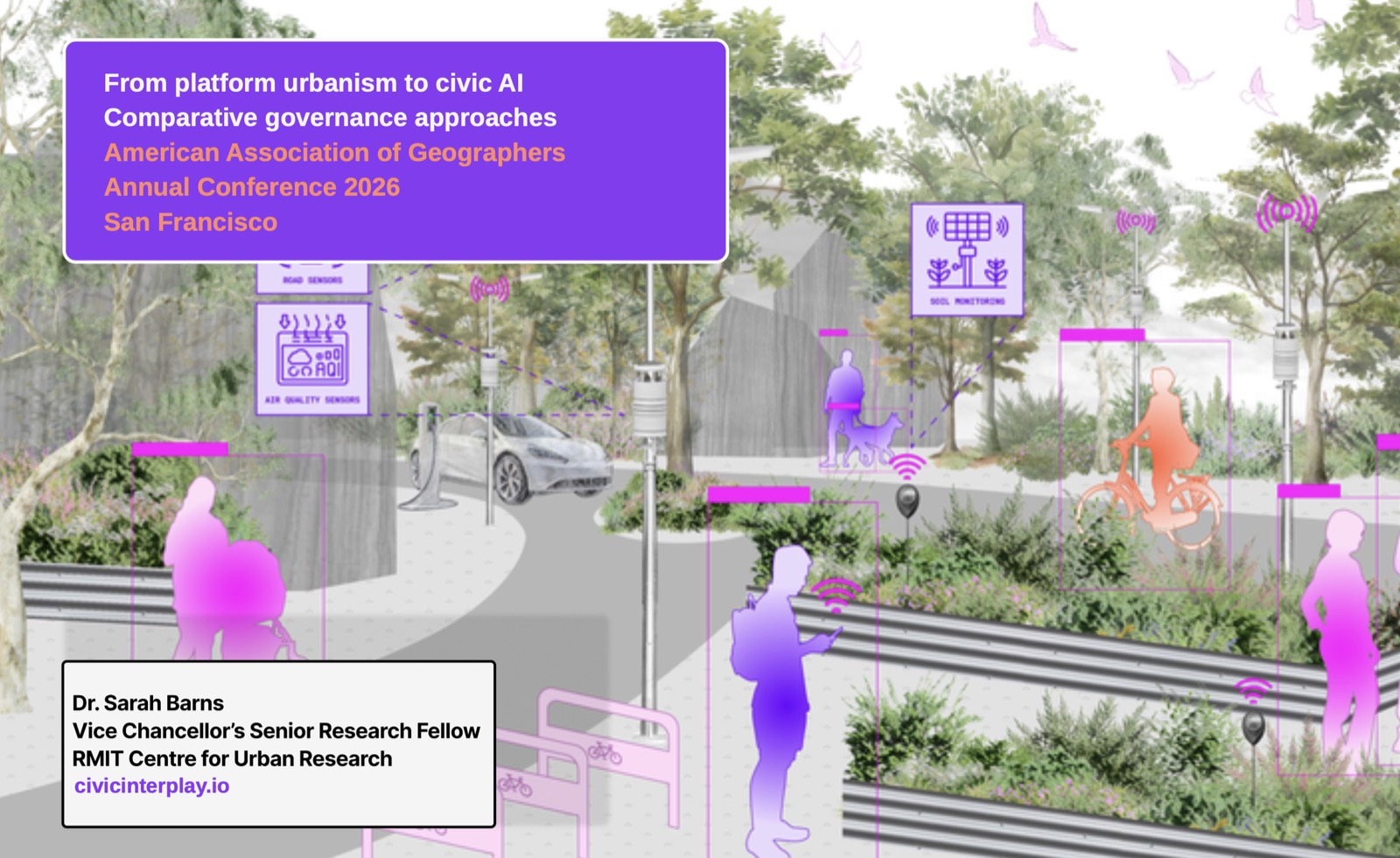
The living atlas gathers different ways of seeing the claims of digital sovereignty as they are made infrastructural across Australia during 2026. The practice was first presented as a talk at the American Association of Geographers (AAG) Annual Conference, San Francisco, April 2026.
Some selected slides from this talk are below.
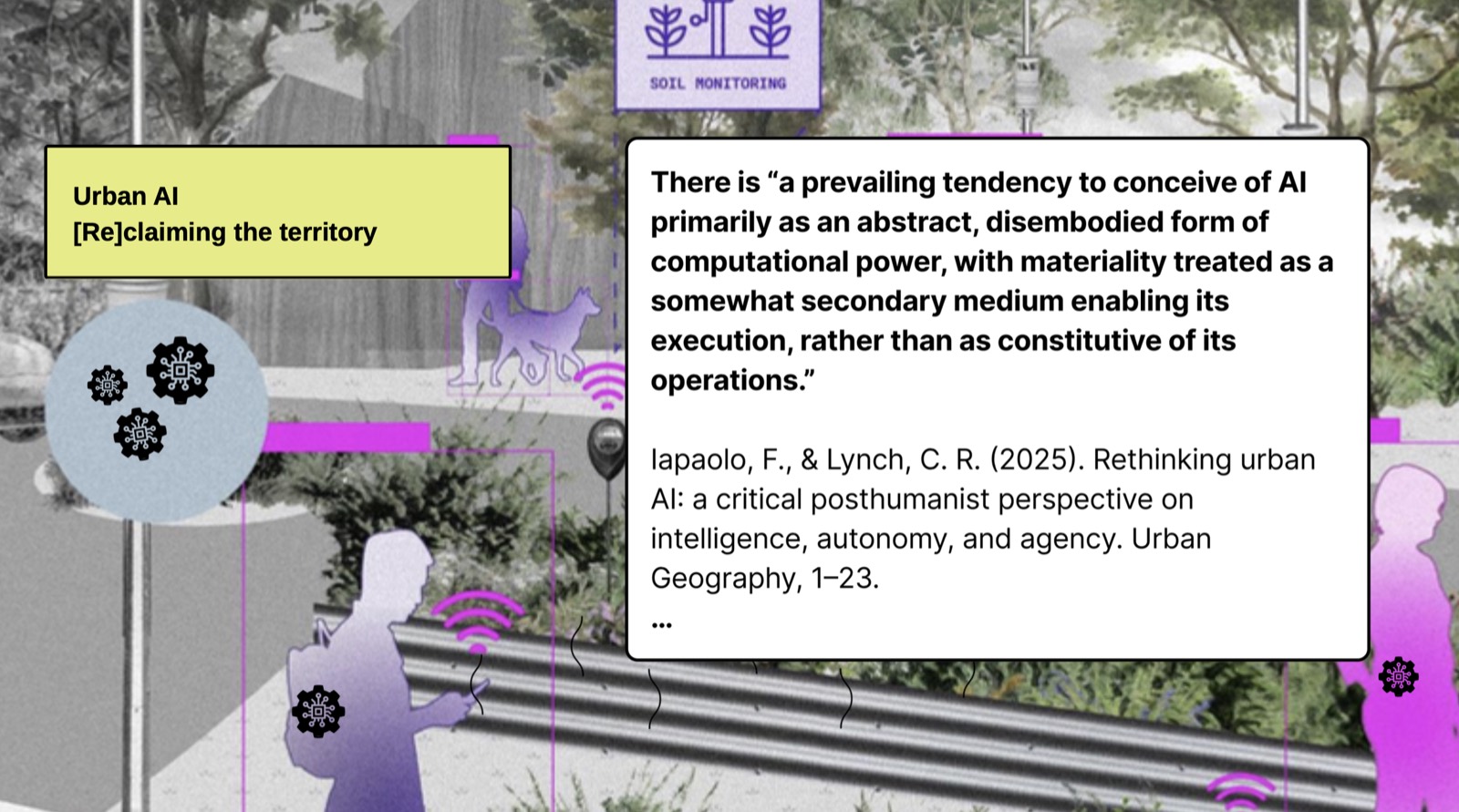
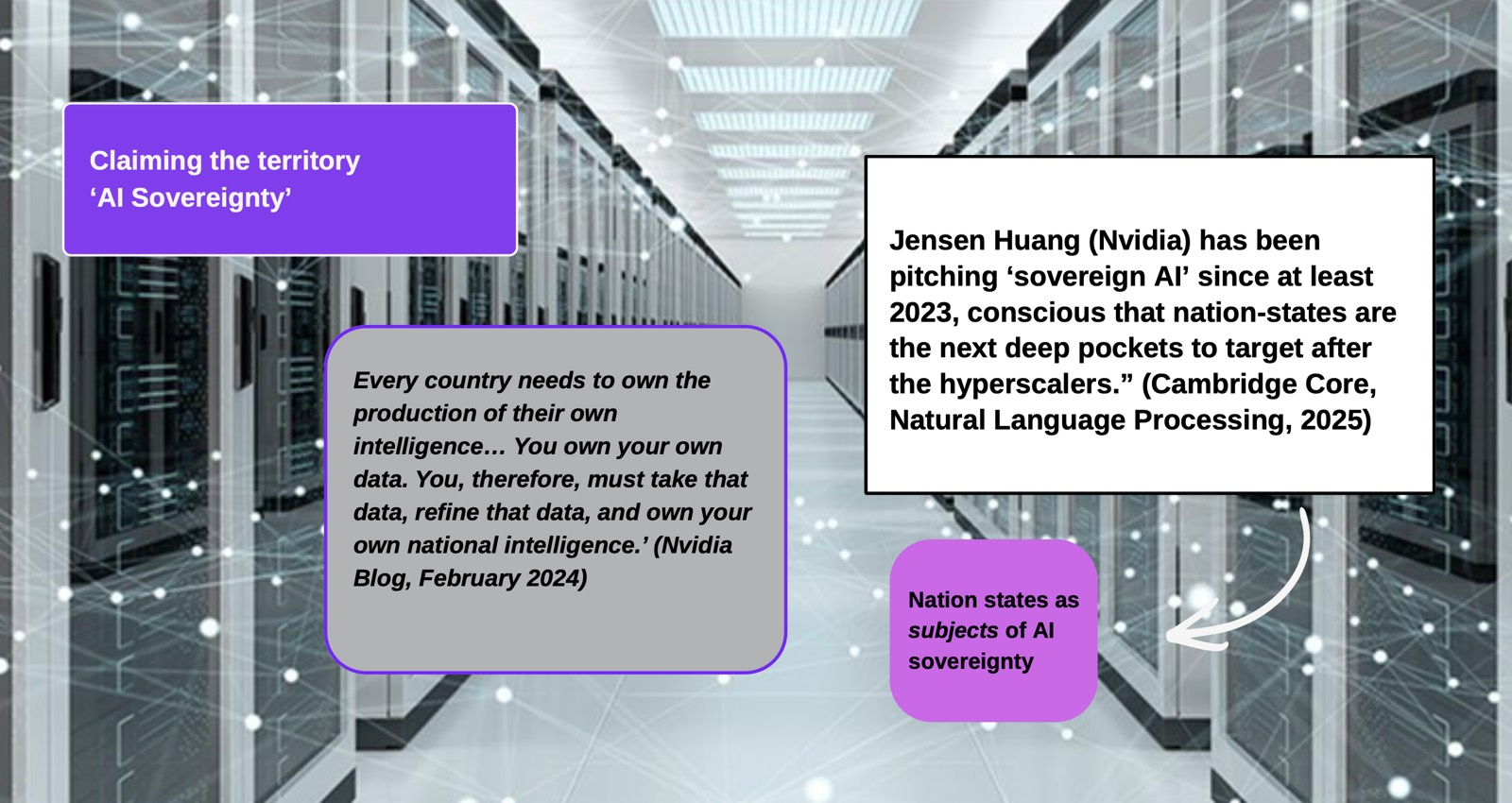
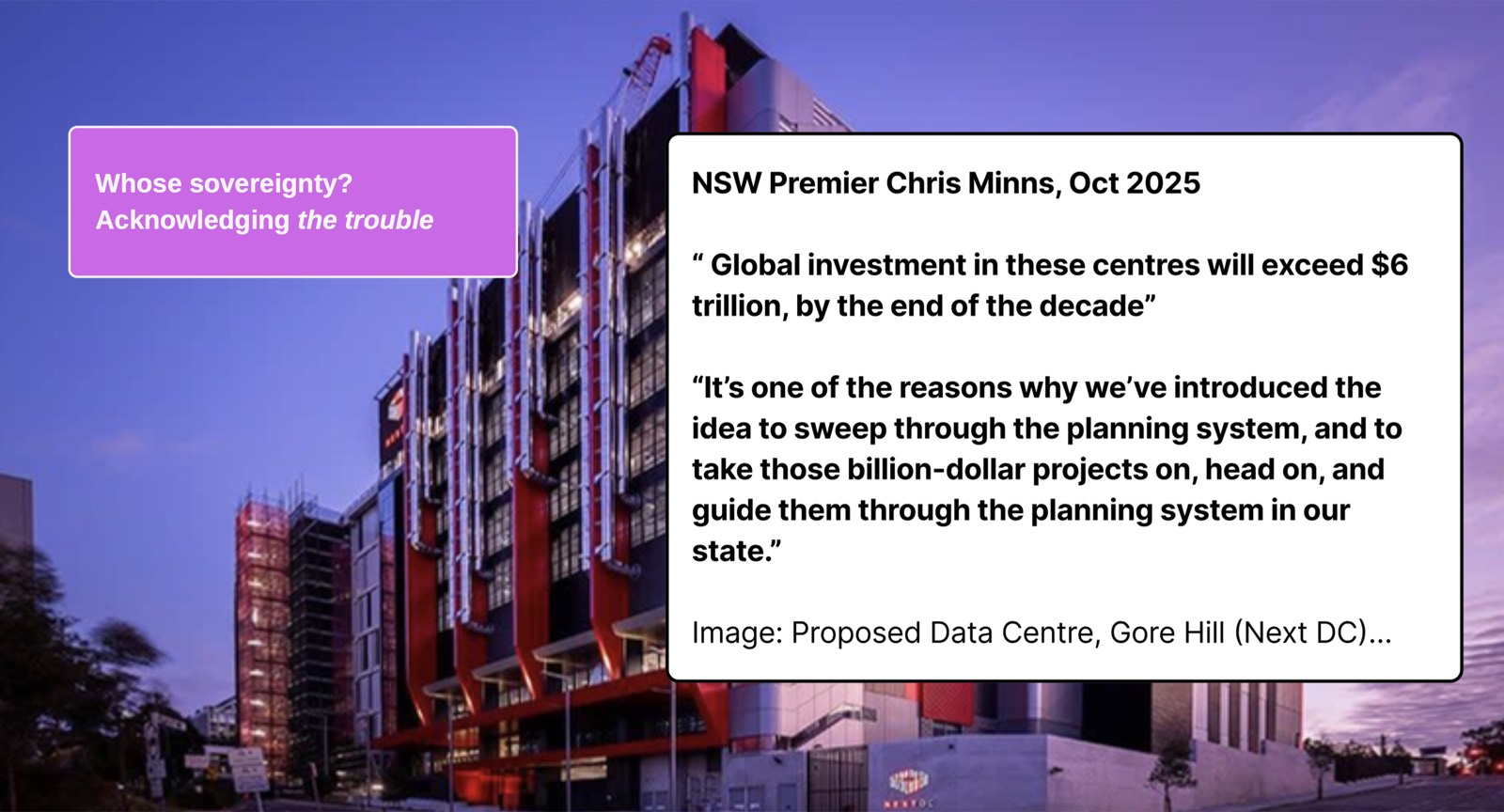
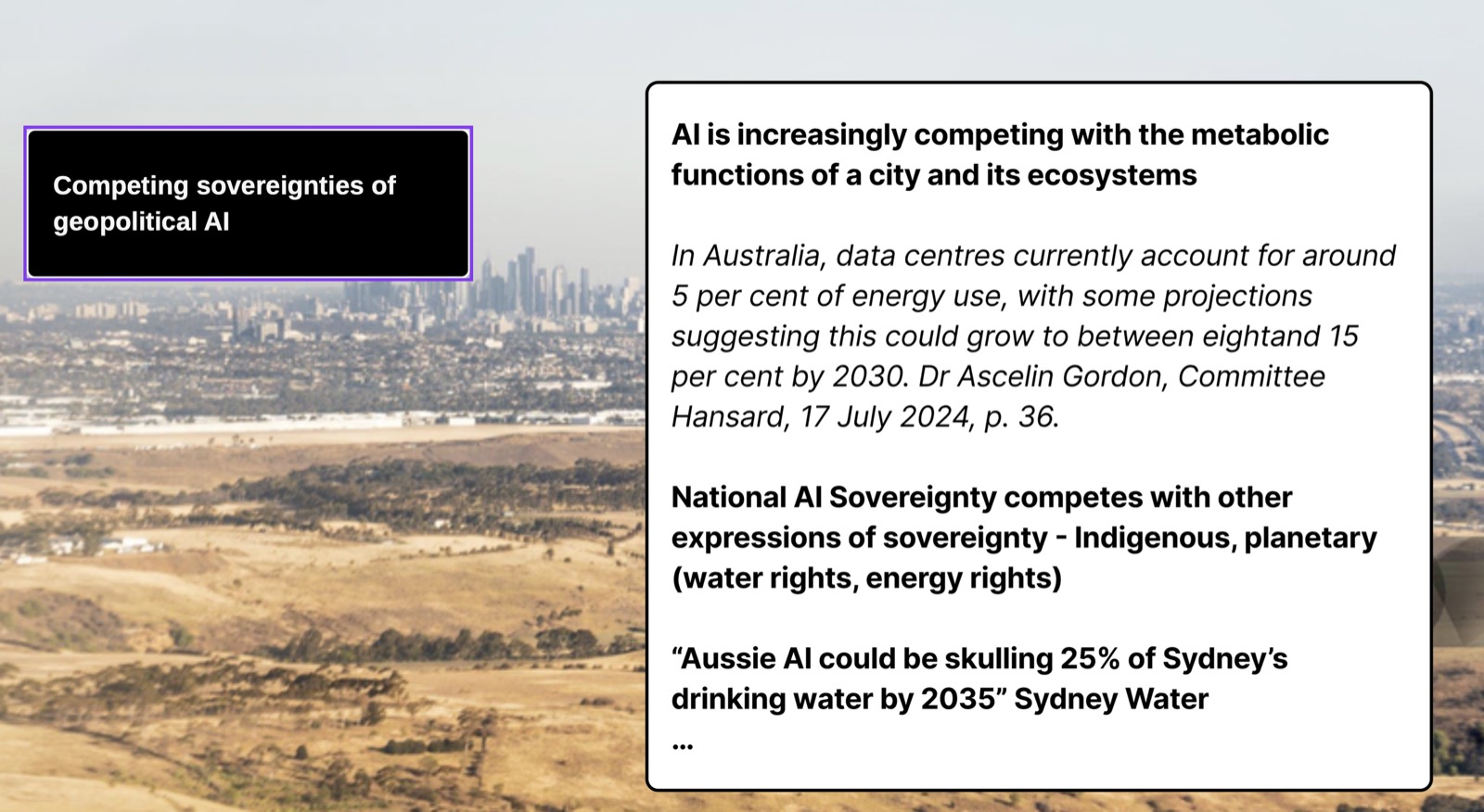
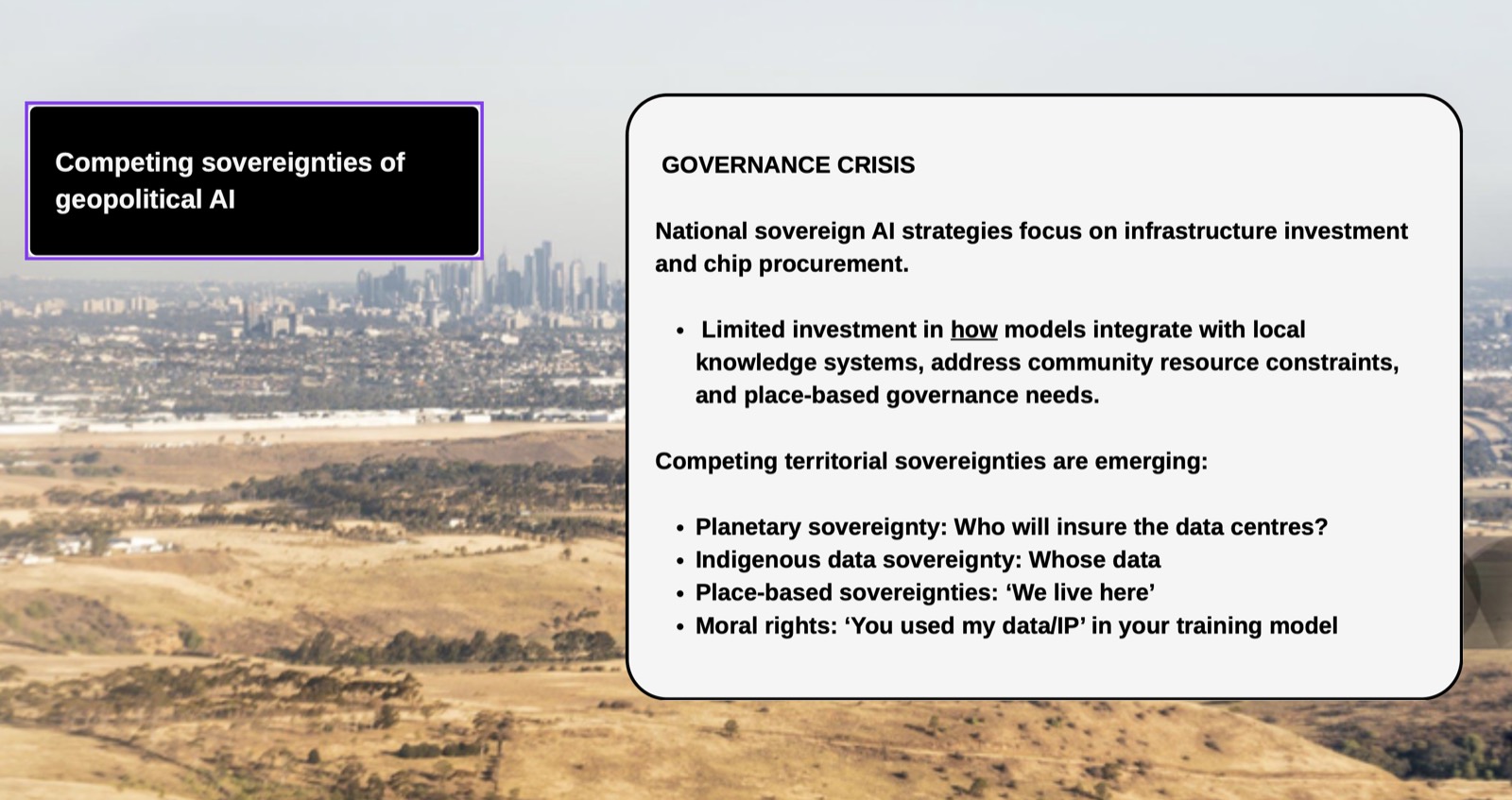
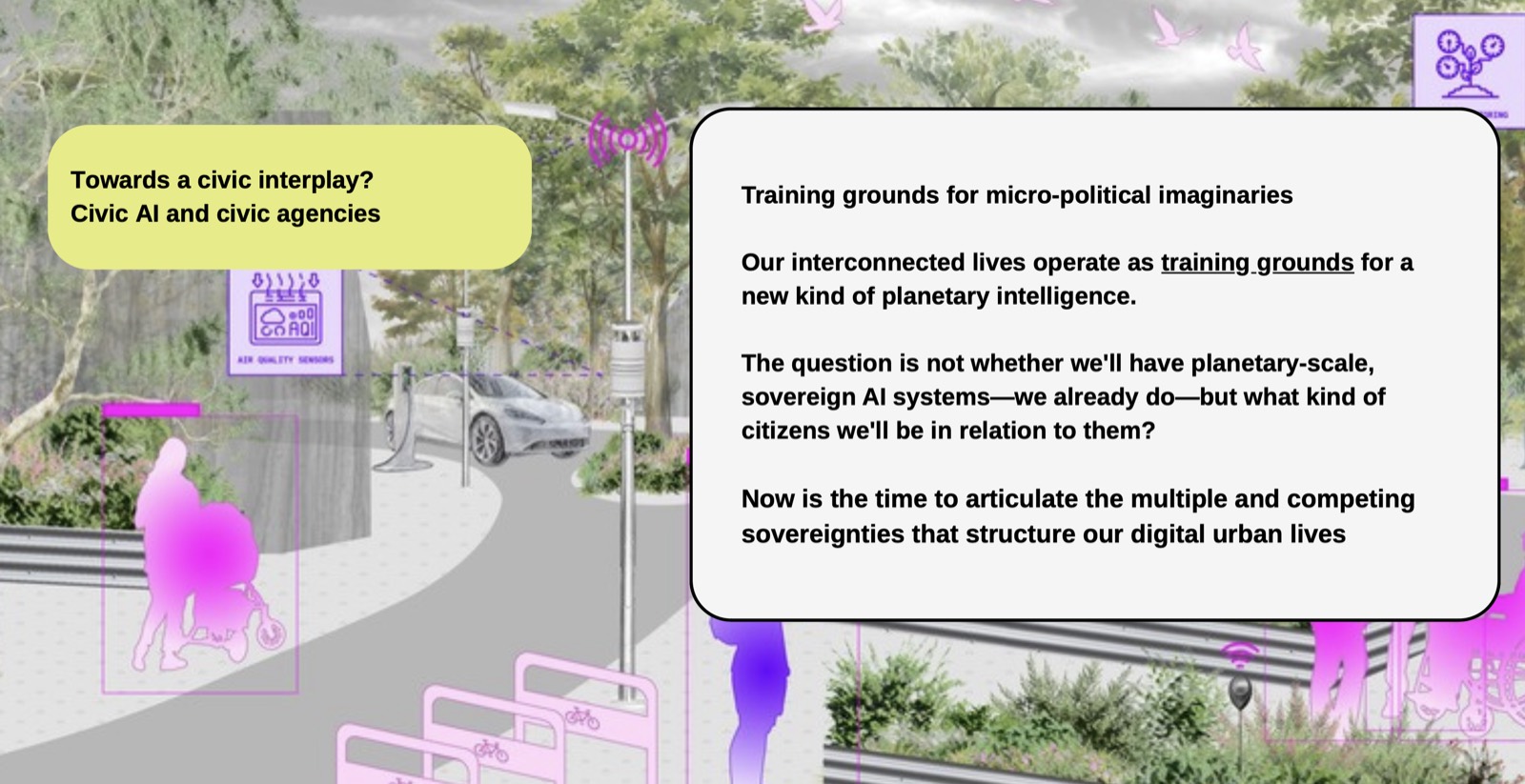
The magical properties of cloud computing and agentic intelligence seem to be descending from their ethereal states.
They are now encroaching on spaces where resources are scarce. Competition - for housing, for water, for energy, for life, for self-determination - is fierce.
“No! You can’t go there!” shout the people when the data centres are announced. Most people don’t want them near. Many people say they didn’t sign up for this AI revolution anyway.
But do they get to decide? After all, this is the expression of ‘National AI Sovereignty’. This is, in Australia, the national government looking after its local compute capacity.
This is also our hyperscalers ensuring local citizens benefit from the rapid emergence of agentic intelligence, and can participate in the new frontiers of global science and innovation.
Curating AI sovereignties
Governments around the world are active players in shaping AI sovereignty: what form it takes, how citizens are enrolled, what structures the ‘AI stack’ actually takes.
The geopolitical terrain is fragmenting, just as hyperscalers are building in new dependencies. In a sense, we are all role-playing now.
This is perhaps not ‘digital civics’ as we have known it, familiar to the era of Web 1.0 or 2.0 or even the platform era.
This is a version of citizenship paying close attention to how very agentic are the path-dependencies we travel upon.
This is a version of citizenship forged through experimental and recursively-informed relations between citizens, states, hyperscalers, agentic models, and local ecosystems and habitats.
This is a version of being-citizen that takes into consideration the risk of becoming-subject of a larger sovereign whose governance logic remains closed.
Being able to listen, watch, pay attention to and even enact multiple kinds of becoming-citizen in this agentic-age is the work to be done, when the territory is still unclear.
Perhaps, then, alternate path-dependencies may be easier to discern.
29 June 2026