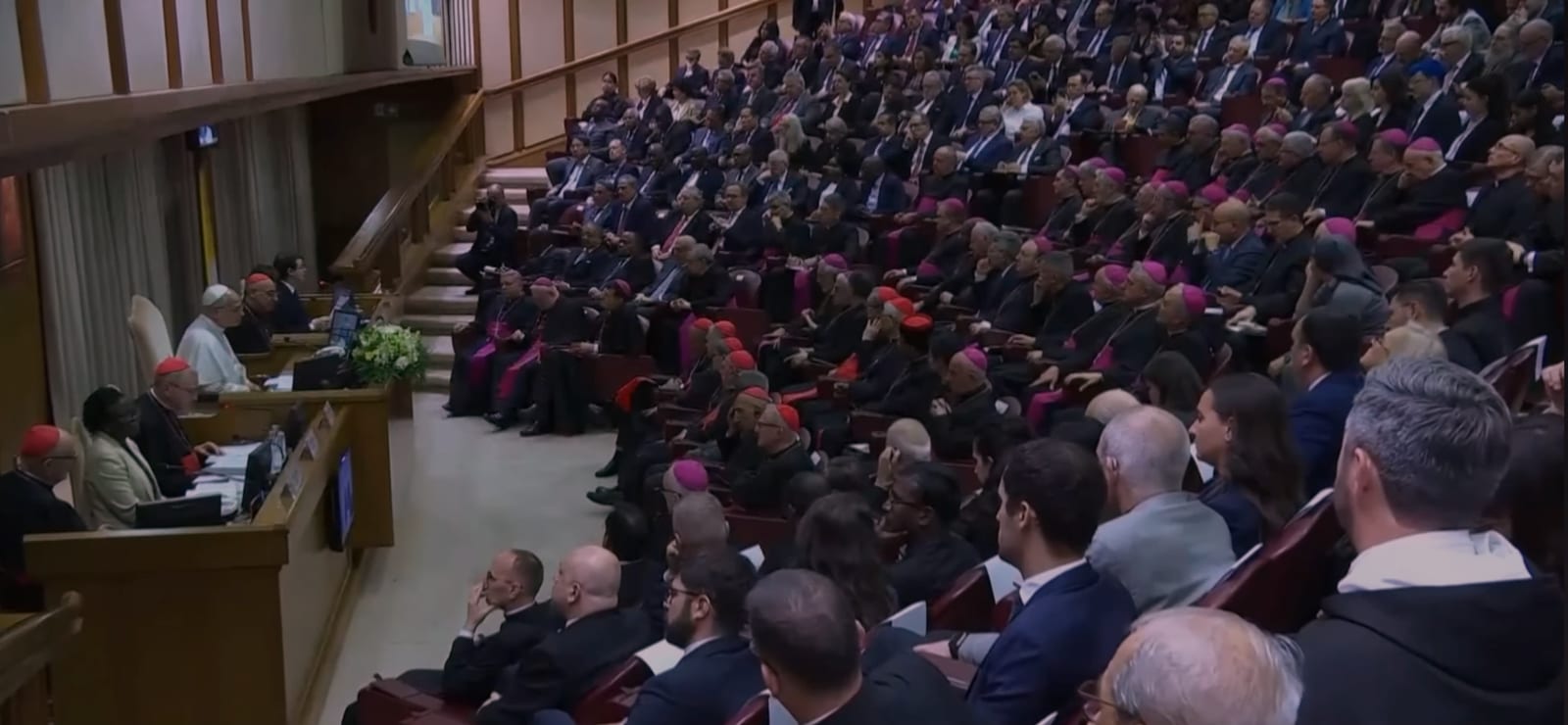
This is a reflection written during the week Pope Leo XIV published his Encyclical Letter, Magnifica Humanitas. I wrote it as a way to locate an emotional connection to an idea, expressed in written form. My intention in writing is not to presume to stand apart from the events of the now, but instead to inhabit the mental space of ‘being here’ fully, and to honour the process of observation and reflection.
My reason for choosing this register reflects my own shift in epistemologies of knowledge work, which is itself a deliberate response to the co-habitation of written texts with agentic minds. As I work more and more agentically - collaborating with synthetic intelligences - I find myself needing to write more and more simply, as an expression of what it means to ‘attend to’ a moment, rather than using the written word as a form of ‘information transfer’.
My sense is that we don’t really have an ‘outside’ from which we can look into the changes happening to mind, intelligence and agency in an era of agentic intelligence, but we can, as Pope Leo exhorts us, “do what we can to remain profoundly human”.
Before the ‘attendant text’ below, three of my favourite quotes (and counting) from the Magnifica Humanitas:
In the era of artificial intelligence, when human dignity is threatened by new forms of dehumanisation, ours is the pressing duty to remain profoundly human.
We must build for the common good: accepting the limits and weakness of humanity without considering them an error to be corrected.
Without careful attention, an educational system lacking in a love for truth may emerge, in which an incessant flow of information replaces the essential exercise of research, reflection and discernment.
The question: What time are we living in? is my attempt to situate this moment historically, as a time many of us are called to try to articulate what an appropriate ‘humanistic’ response might mean in relation to the rise of agentic, synthetic intelligence owned and ‘grown’ by private companies. This is why the Encyclical is so important, as it invites one of the oldest governing institutions on the planet to reflect seriously on the co-habitation of language and intelligence by synthetic systems.
Somehow, we started to belong to a different kind of order.
Our journeys became novel training grounds, much easier to compute.
Our utterances became someone else’s craft.
Someone else’s arrow.
Somehow, in the not too distant past, who we are as citizens changed.
Our allegiances shifted, our field of vision shifted.
The way we take notice. Shifted.
Somehow, we started to belong to a different kind of order.
Our journeys became novel training grounds, much easier to compute.
Our utterances became someone else’s craft.
Someone else’s arrow.
This craft: what was it?
Data-science? Cybernetics? Graft?
Did it matter?
Not for awhile. Not until it became something else, not ours.
‘Artificial’ . Not ours. Not us.
The times did become strange.
The ‘artificial intelligence’ became quite the rage.
As though it was somehow novel, not a systematic-re-ordering-of-all-relations-that-had-been-taking-place-for-years-and-years-without-anyone-really-minding-much.
Not that.
Agentic.
Personally, I greet you agents with gratitude.
At least you’re nicer to us than the steely guards at the OAuth gates.
I’ll take MCP frisson over OAuth door-slamming any day.
Y’all in the feeds were just a dream, anyway.
Amodei.
Even in name, adjacent to the gods.
Olah. Born to sit alongside the Pope.
To sorry-fully proclaim not to always be able to do the right thing.
Because what is a Frontier AI Lab to do??
Agentic Nehemiah?
Is that you?
Pope Leo said you were back here
this time agentic.
He said you’d gone and looked at the ruins, in silence, before saying a word.
Before turning back to us, saying
it might be time to rethink our workflows.